
Interview with Annie Brito Hodgin
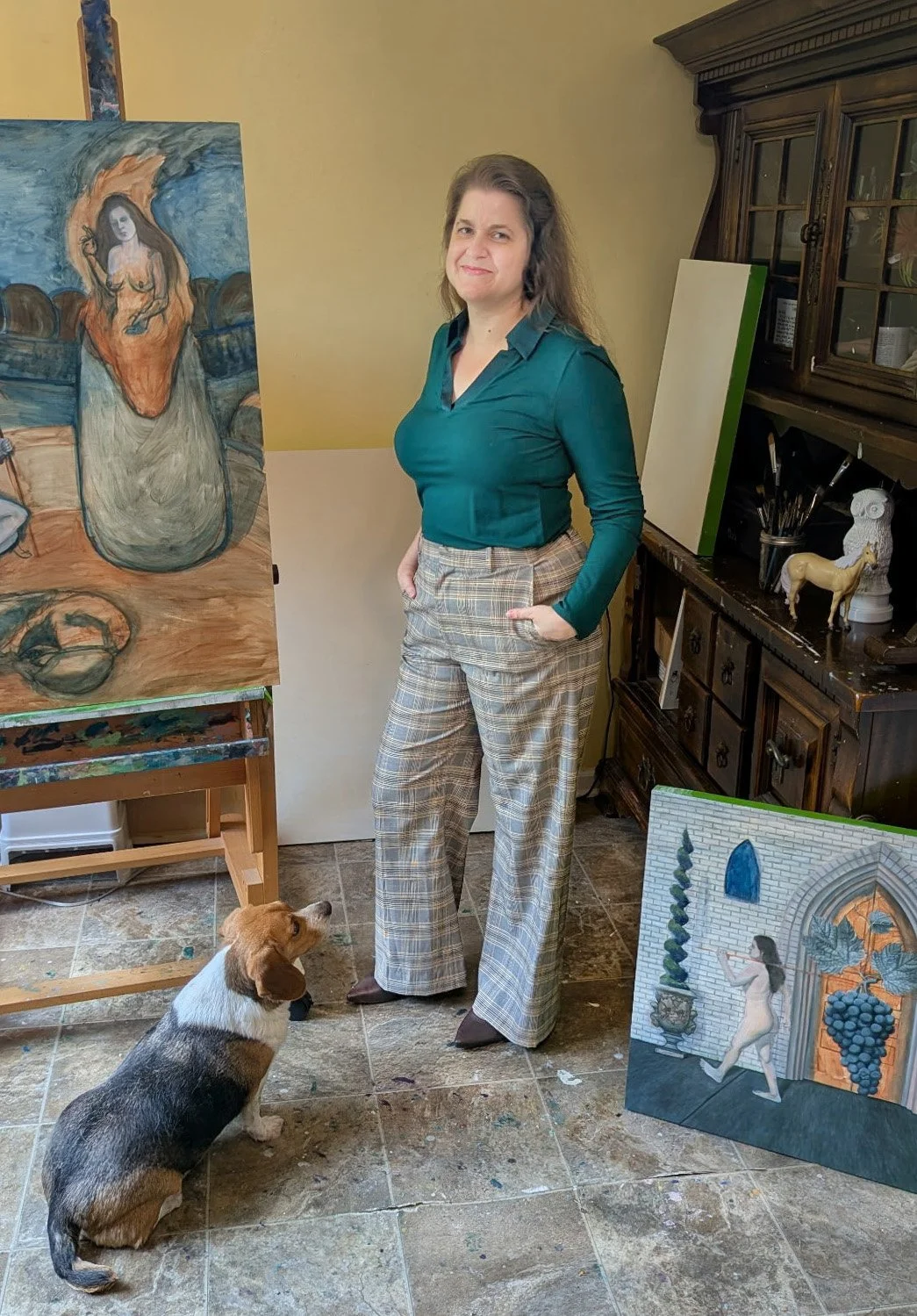
Annie Brito Hodgin (b. 1983) is an American figurative painter known for psychologically charged oil paintings that draw on mythology, literature, religion, and personal memory. Born in Poughkeepsie, New York, and raised in the American South, she is largely self-taught and lives and works in Hendersonville, Tennessee.
Over the past decade, Hodgin has developed a distinctive painting practice centered on the emotional and symbolic experiences of women. Her work explores themes including trauma, repression, ambiguity, culpability, power, and the lingering effects of Southern cultural expectations. Using layered oil paint, expressive mark-making, and recurring symbolic imagery, she creates enigmatic scenes that invite multiple interpretations.
Hodgin's first solo exhibition, Southern Labyrinth, opened at Red Arrow Gallery in Nashville in 2023 and established her as an emerging voice in contemporary figurative painting. She has also participated in numerous group exhibitions, including SHOW UP! at the Nashville Parthenon, Interior/Exterior, and Nashville Hot Summer. Her second solo exhibition, Beg for a Sign, followed in 2024, and she has continued producing new bodies of work exploring biblical and mythological narratives through a contemporary psychological lens.
Her paintings are held in private collections throughout the United States and internationally.
INTERVIEW WITH ANNIE BRITO HODGIN AND LAURA DAY WEBB
You are a largely self-taught painter who came to art through your own independent studio practice. Can you talk about how you first became an artist, and what pushed you toward painting as a serious pursuit?
Like so many artists, art is something I've loved doing from childhood. I was one of those kids who drew all the time. My exposure to "Art" was limited, most especially by the fundamentalist Baptist faith I'd been raised in. My first art classes were at my small Southern Baptist college, where I was introduced to and fell in love with oils. The program was small (one studio professor for everything--shoutout to the wonderful Wanda Sullivan) and limited by the faith parameters of the school in what classes could be offered (no figure painting, truncated lessons on contemporary art for example). But I ate up everything I learned. Oil painting particularly brought me so much joy.
I stopped painting after college, though. I didn't realize until well into adulthood that I have OCD. One of the persistent symptoms for me has been an unattainable need for self perfection. As a result, although I loved the process of making art, I felt so humiliated by every perceived flaw in my work that I destroyed or threw away everything I made. I felt unworthy to release anything into the world: what was the point if I wasn't at the cutting edge of artistic expression? Why foist that on the world? And worse, what if my expression of ideas led someone away from God? Mine was not a culture that saw "artist" as a legitimate career path outside graphic design (which my school didn't offer), or that even valued careers for women who planned to marry and have children. I was in too deep at that point in my life to push back on that thinking as it applied to me, even though I didn't apply it to others.
At 26, after my first daughter was stillborn, I started therapy, which without exaggeration fully changed my life. I'd been taught to see psychology as at best a worldly distraction, at worst a tool of Satan. And once again, though I didn't precisely believe that by this point in my life, therapy was not something I'd ever considered for myself. But I was desperate and no other help was working. My therapist--over years--guided me through my grief, and into the knowledge of the mental health issues that had always been with me. I learned healthier coping tools and eventually started an SSRI that took my obsessions and compulsions down to a really freeing degree. During this time, I started drawing again, and I realized my relationship with my finished work had changed. I could see value in it, and the imperfections motivated me to learn rather than shutting me down.
I started to miss working with color. So I transitioned to colored pencils, then acrylic paint, then finally back to oils. The content was changing, too. I'd always just drawn from life. Now I was incorporating feelings and ideas into personal, imaginary work. I was simultaneously learning more about contemporary art than ever, thanks largely to Instagram honestly. For the first time I had a feel for what was going on in the current art landscape. Though it may be a stretch to say I felt worthy to add to it, I did feel like my expression mattered, even if it only mattered to me and those who loved me. That was enough to start.
Although I had learned the basics during university, my painting experience had been quite minimal, so I had a lot of catching up to do when I restarted oils around a decade ago. But my studio practice had become so deeply fulfilling; I just wanted to paint all the time. So I decided to give things a go professionally. I figured if I could sell work I could justify continuing to make work. I made my own Instagram. I started submitting and getting paintings accepted into group shows. After that it wasn't long before my gallery found me and asked about working together. In 2023, I had my first solo show at Red Arrow. I had turned 40 that year. The decade between 30 and 40 had turned my life on its head in a beautiful way I'm grateful for every day. I've been very lucky.
Your paintings often feel suspended between dream, memory, and psychological allegory. When you begin a new piece, do you usually start from a personal experience, an image, or an emotional atmosphere?
The starting point has varied over the years. Some have started with an experience/memory (a bat falling into our pool, a family member falling off a dock on a fishing trip). Some have started with a specific object or image that feels personally significant to me (datura flowers, a cornucopia, a gazebo). My most recent paintings start with Old Testament Bible stories, which given my background are grounded in memory and charged imagery as well. I think ultimately most of my work combines all those things. The woman staging the Bible story is in a half-remembered living room from my childhood, or with an animal I love, or with objects I've coveted.
You have described your figures as “avatars” exploring trauma, repression, absurdity, and control. How do you decide how much of yourself enters those characters versus allowing them to become fictional or symbolic beings?
Oh that's interesting to think about. I wouldn't say there's a conscious decision happening. The figures feel other to me. Obviously they come from a personal place, but they aren't self-portraits. I relate to them though, and sympathize with their struggles; I feel real affection for them. They read to me as flawed characters, lonely and often in denial, trying to grab the reins and discover meaning in a world where they have little control, and maybe there is no meaning. I relate to their desperation, their fear, and their alienation.
Southern landscapes, insects, birds, water, and decay appear throughout your work in ways that feel both beautiful and unsettling. What draws you to those natural elements as narrative tools?
I have a strong affinity for and fascination with the natural world. It's of course full of gut-wrenching beauty, but it's also indifferent to human well-being, often dangerous and destructive from our perspective. That speaks pretty directly to the idea of being at the mercy of forces we can't control.
In works like A Pelican in the Wilderness, the symbolism feels intentionally open-ended, simultaneously spiritual, ominous, and darkly humorous. How important is ambiguity in your storytelling?
That's a really gratifying thing to hear: I'm glad it feels that way for you. I think I personally bring a lot of ambiguity to the work, so it feels good to me when it feels open to others. And I do try to find a mood that feels true to my experience, so I prefer any given painting not be all dark or all light, all pathos or all humor. Painting helps me meditate on ideas and feelings, but it's not a way I arrive at answers. Openness of meaning around art is one of my favorite things about it: that everyone brings their own history to their responses, and that they can change over time as we change. It's a significant reflection of our reality as a species. Sadness and humor and anger and joy can all be part of any single experience, even within one person, never mind variances from person to person.
Your work often captures women in moments of vulnerability, vigilance, or transformation. What kinds of conversations do you hope viewers, especially women, have with themselves after spending time with your paintings?
I can't really say that I have a particular hope for a certain kind of conversation, but I always hope the work finds its audience. I don't know that there's any art that speaks to everyone, but some of us share DNA, as I heard Brenda Goodman put it once. It's a treat when your work finds appreciation by people who share that DNA. Whatever it sparks in them is a wonderful thing.
SELECTED WORKS
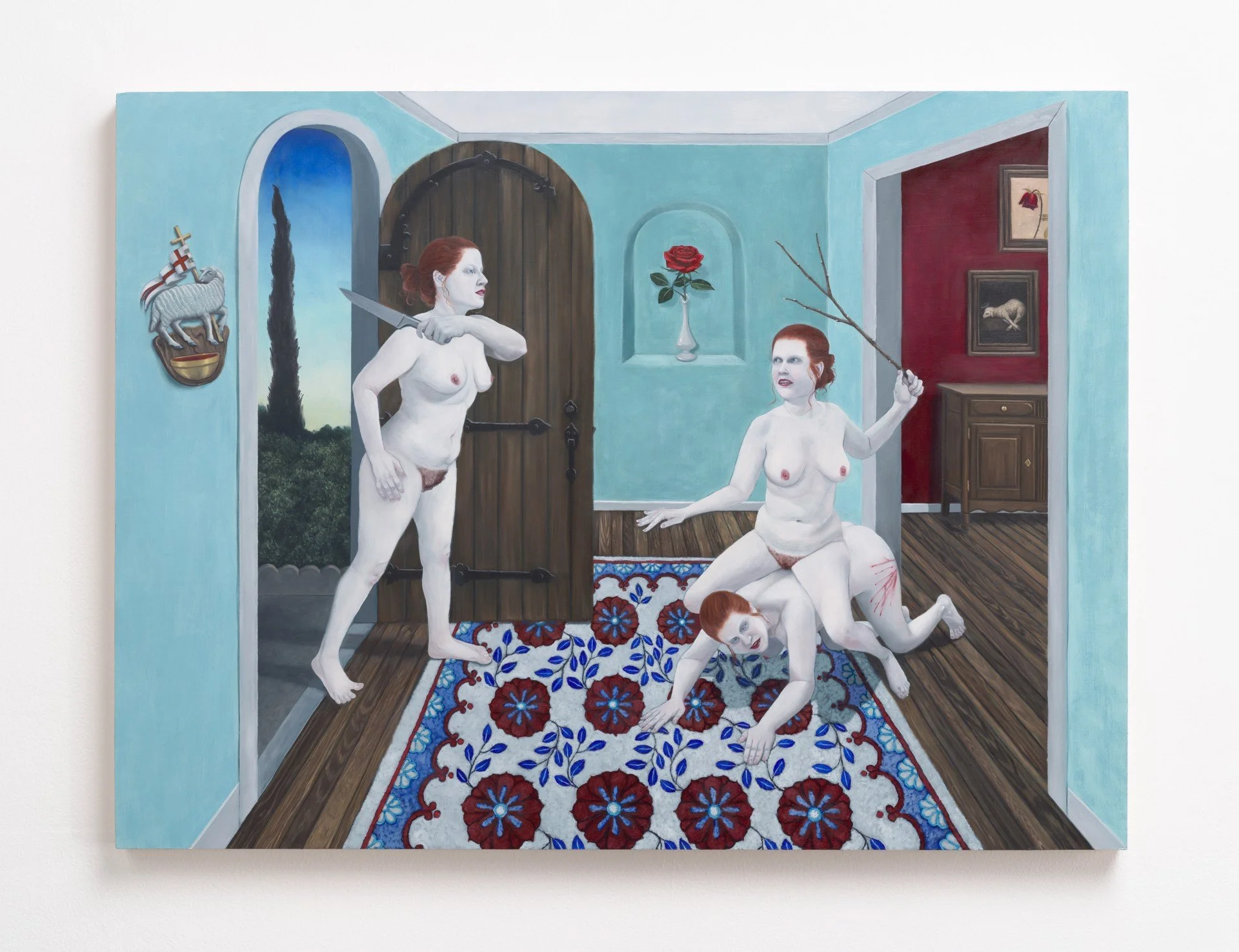
Annie Brito Hodgin
Balaam’s Donkey, 2026
Oil on panel
30 x 40 in
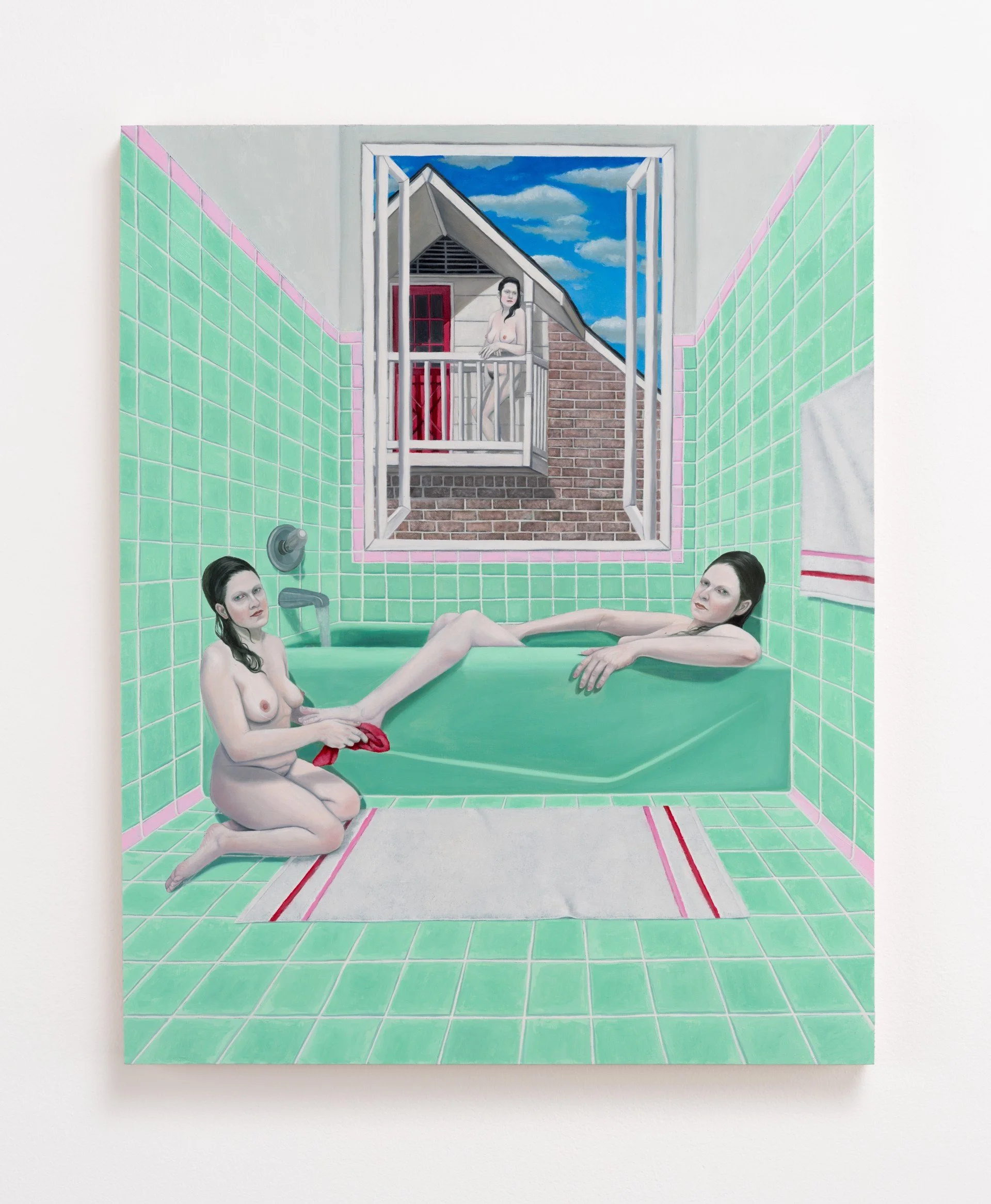
Annie Brito Hodgin
David and Bathsheba, 2026
Oil on panel
30 x 24 in
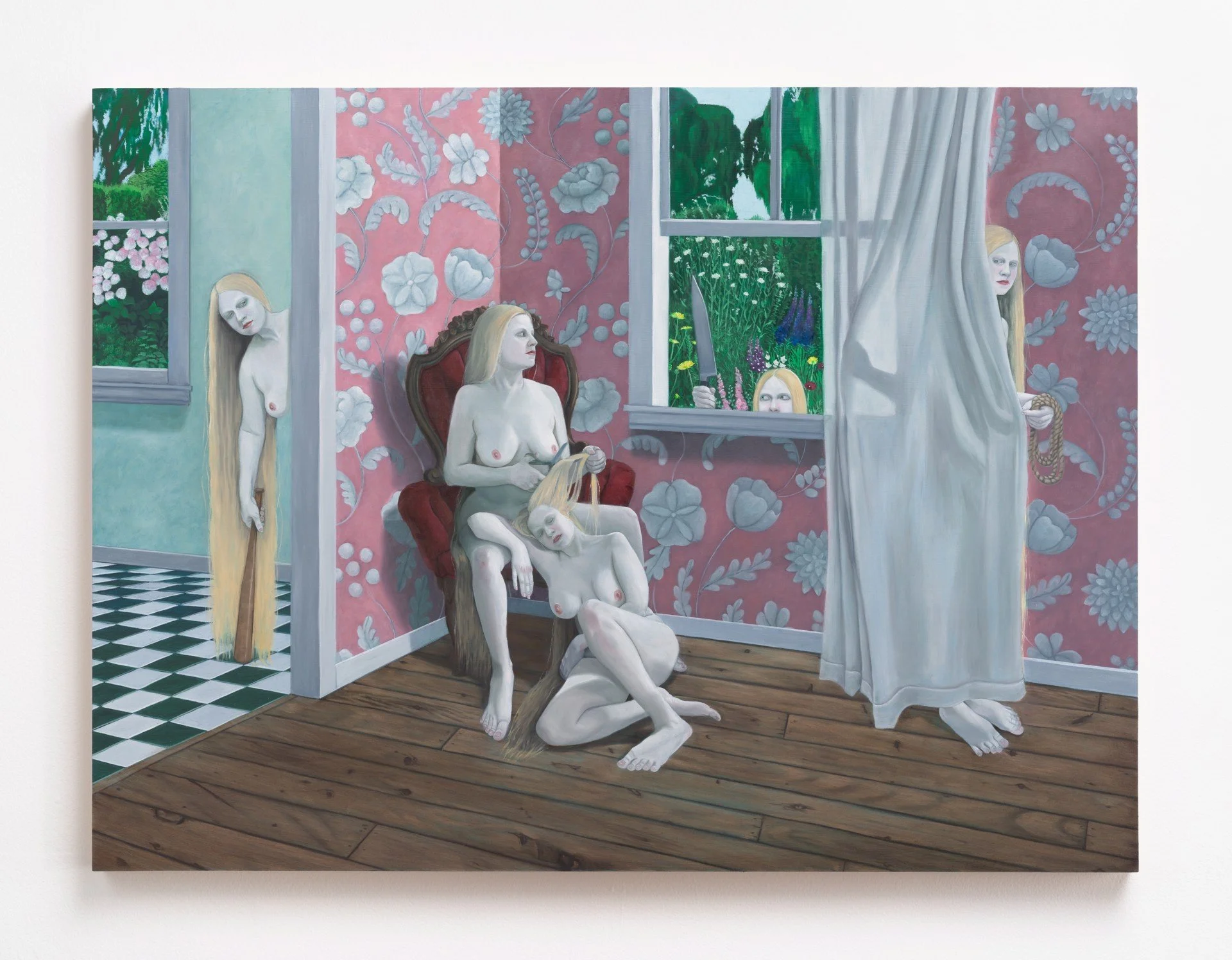
Annie Brito Hodgin
Samson and Delilah/The Philistines are Upon You, 2026
Oil on panel
30 x 40 in
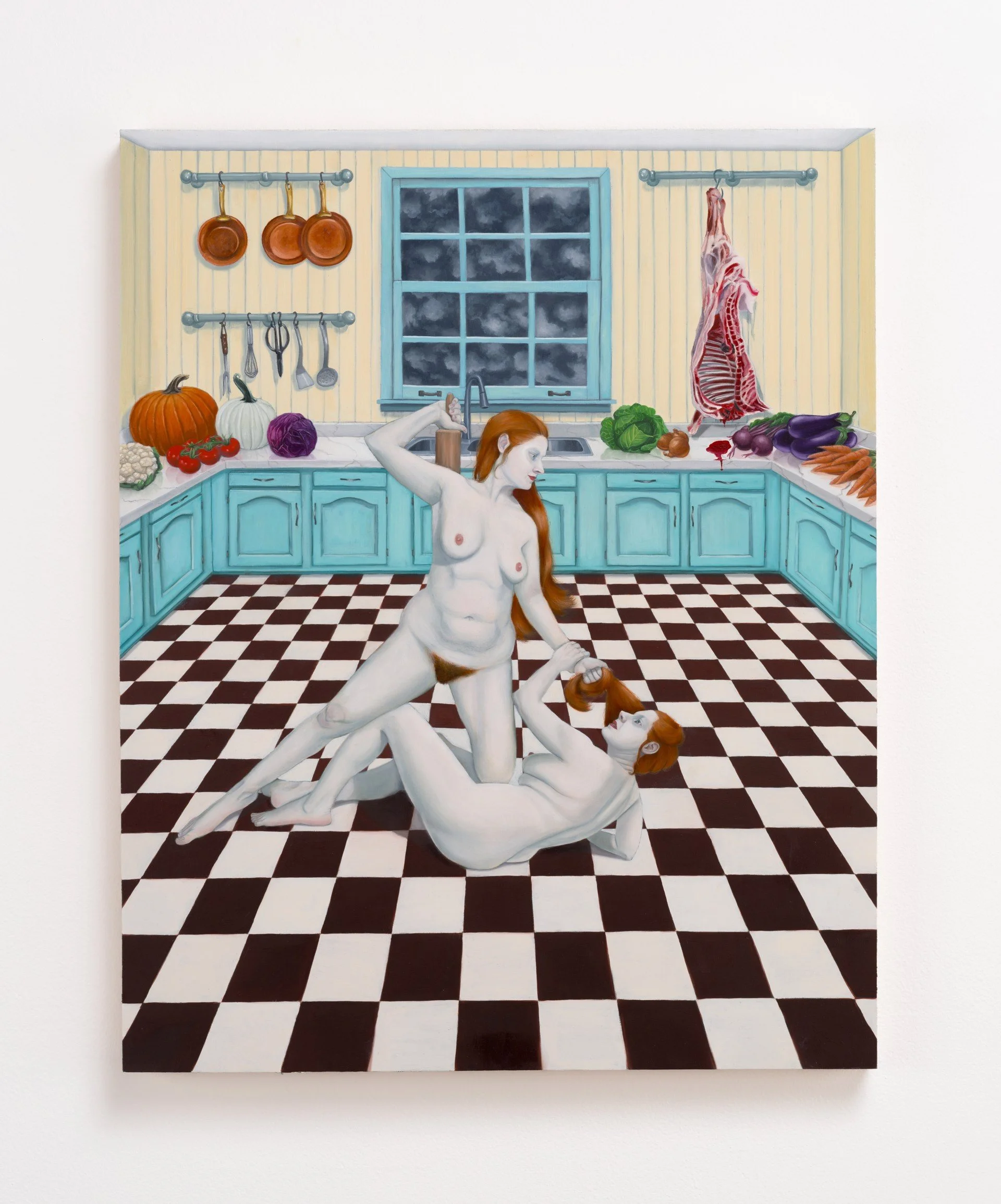
Annie Brito Hodgin
Cain and Abel, 2026
Oil on wood panel
30 x 24 in