Interview with Ariel Adkins
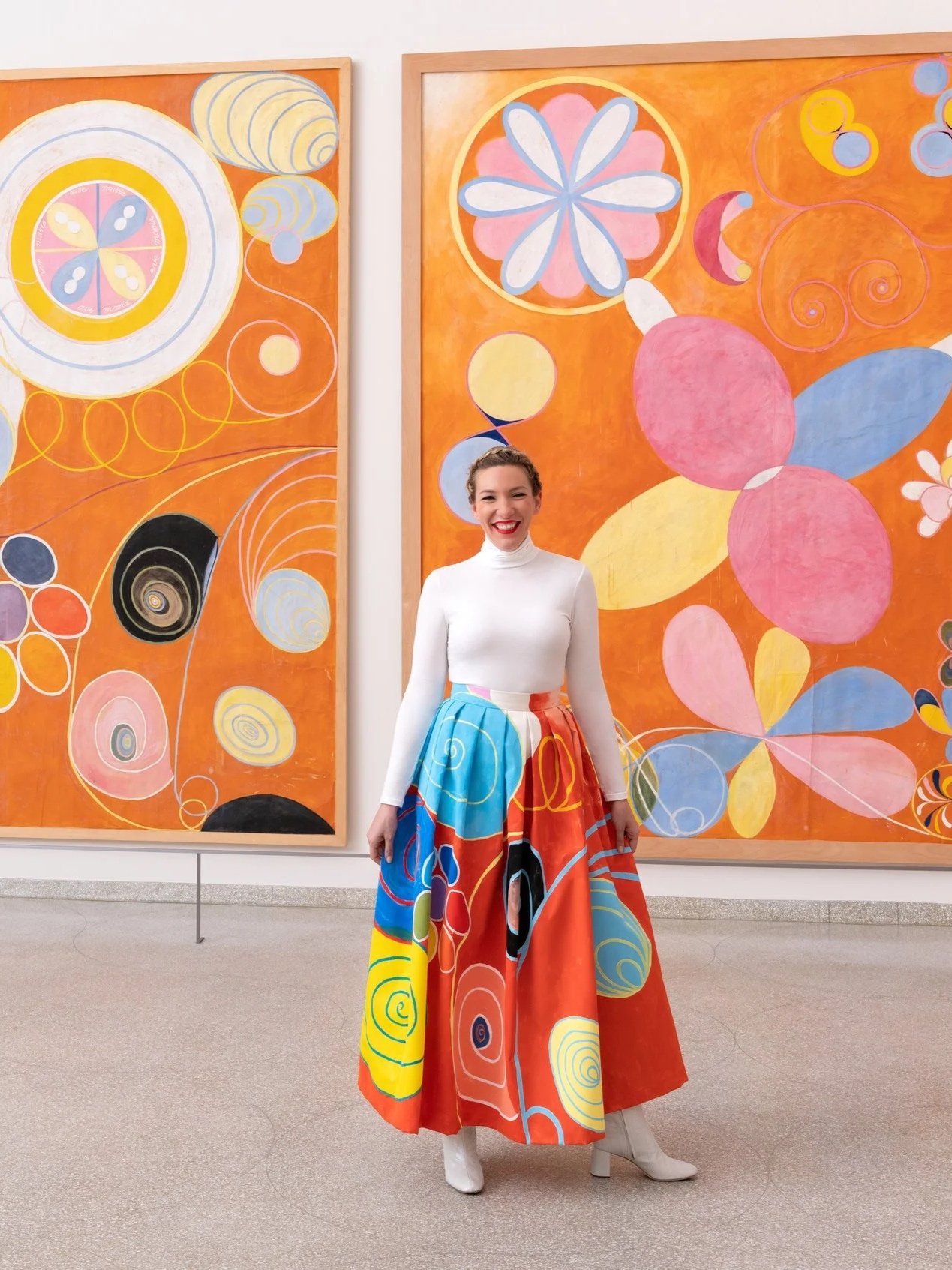
As the founder of Artfully Awear, Ariel Adkins creates wearable art that transforms clothing into a storytelling tool, deepening art appreciation and fostering human connection. Her work has been featured in the New York Times, VOGUE, New York Post, My Modern Met, Forbes, and Colossal, and she collaborates with major museums, including MoMA, the Guggenheim, and the Van Gogh Museum.
In addition to her personal art practice, Ariel is a sought-after consultant, partnering with brands, cultural institutions, and organizations to develop impactful campaigns, strategic activations, and community-driven initiatives. Previously, she spent nine years at Twitter, where she established and scaled the company’s global art & creator program, curating over 30 exhibitions and launching initiatives that amplified diverse creative voices.
Website
Instagram
INTERVIEW WITH ARIEL ADKINS AND LAURA DAY WEBB
Artfully Awear began as a deeply personal response to loss, and you have described clothing as a “point of entry” into art. How has that initial impetus evolved over time, and how has your relationship to clothing-as-art changed?
Artfully Awear began as a way of stitching myself back together. After losing my mother, who was my mentor, creative partner, and best friend, I needed a language that didn’t rely on words. Clothing became that bridge. Wearing artwork allowed me to feel connected to color, to beauty, and to other people at a time when connection felt impossible.
Over time, that very personal practice has grown into a communal one. What began as a tool for my own healing has become a way for others to see themselves in art as well. I still think of clothing as a “point of entry,” but now it is less about my own entry into art and more about inviting others in. The garments no longer hold only my story; they hold many stories and countless encounters. My relationship to clothing-as-art has expanded from catharsis to connection, and from personal ritual to shared experience.
Much of your work involves translating artworks—paintings, installations, even sculptures—into wearable forms. How do you decide which artists or pieces to respond to, and what does your creative process look like from inspiration to final garment?
I am drawn to artworks that make me feel something physically. If I can sense the temperature of a color, the rhythm of a brushstroke, or the weight of a form, that usually tells me there is something there to translate.
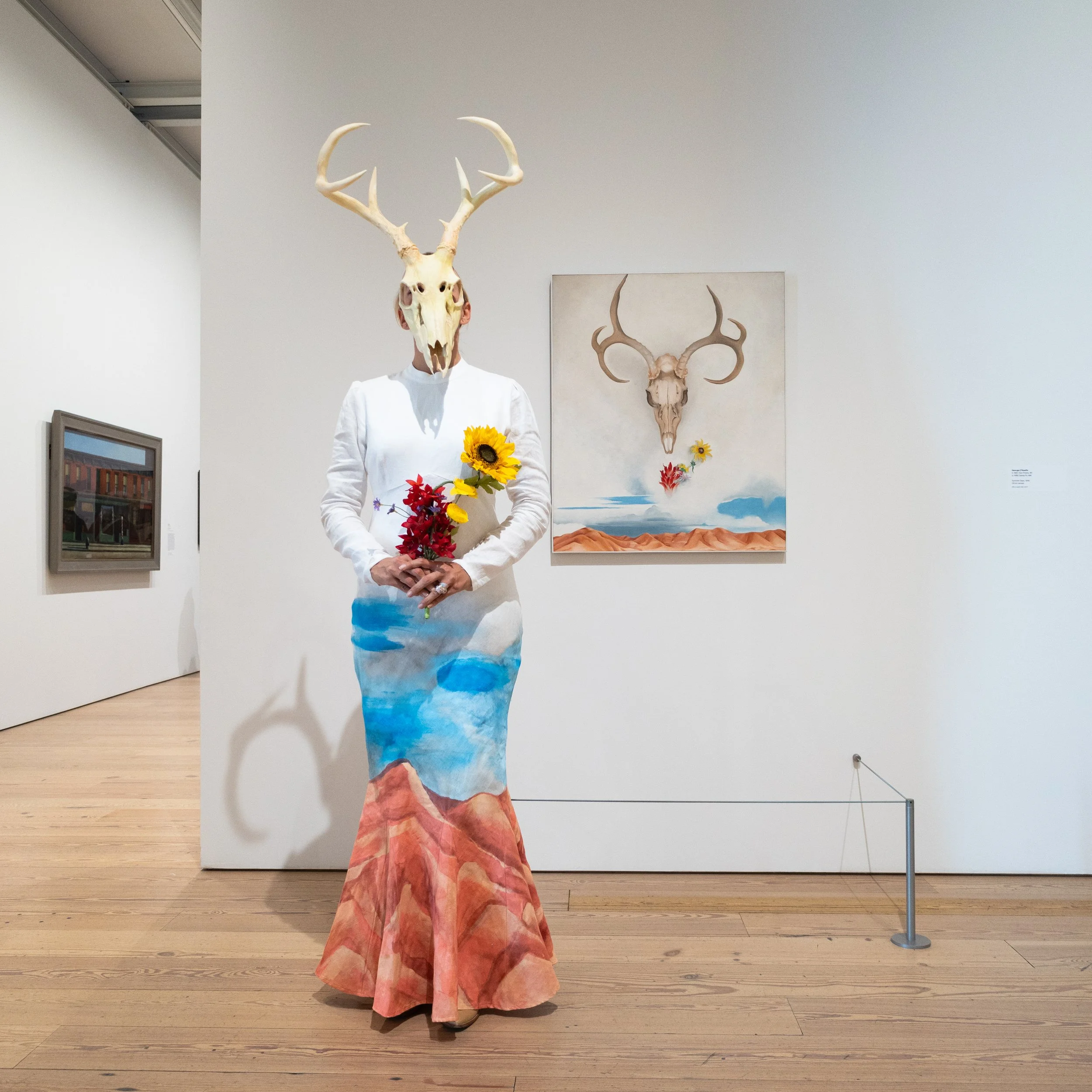
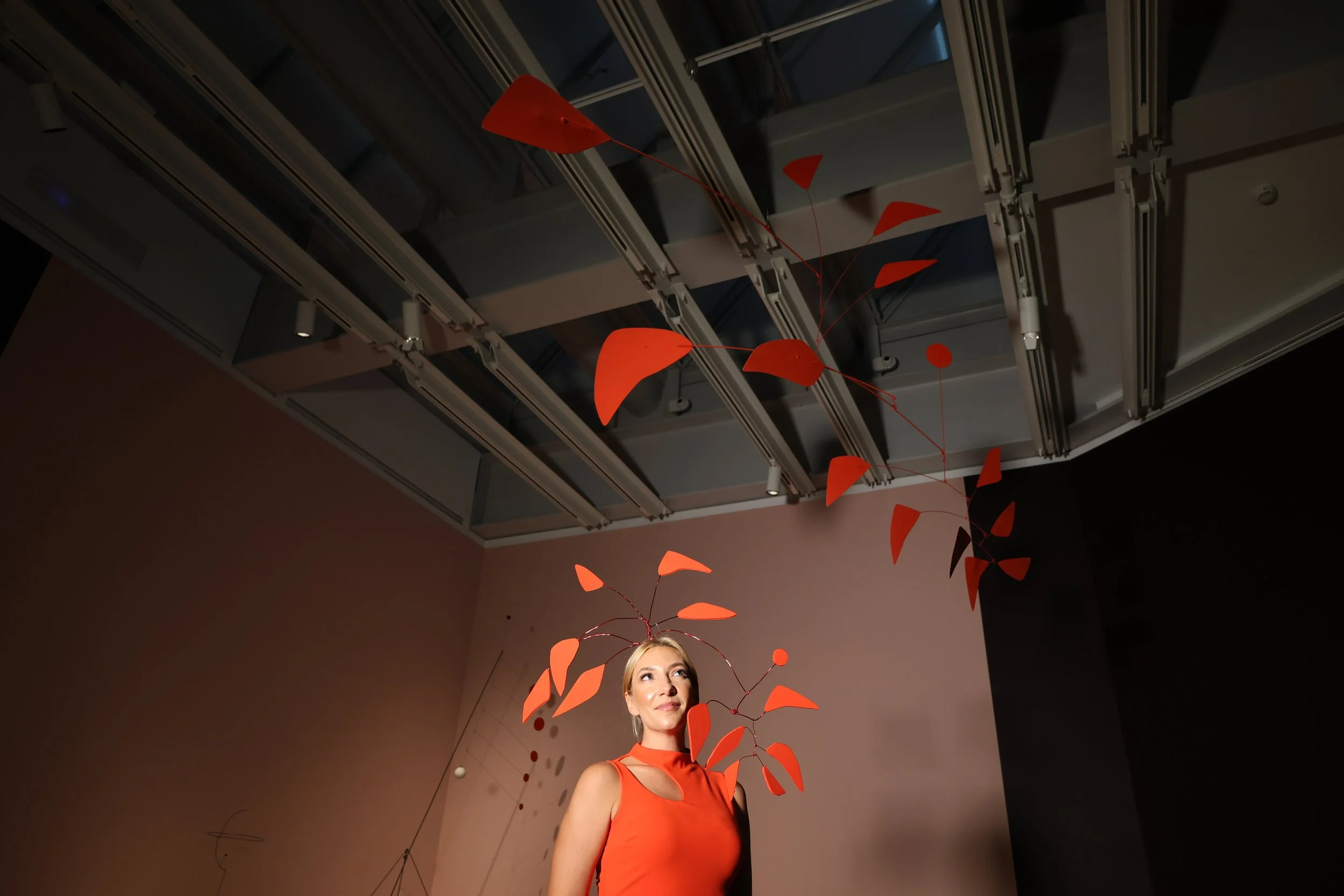
When a piece captures me, the process becomes a dialogue. I research the artist’s intention, materials, and historical context. I spend time with the artwork, sketching shapes and textures and imagining how the composition might move on a body. From there I experiment with materials, mix pigments, and test fabrics. Sometimes I build sculptural elements to echo the original form. I think about how the garment will be lived in and how it will move and interact with light. The transformation is only complete once it is worn.
The final garment is not a replica. It is an interpretation and a way of carrying the artwork into a new space and a new conversation.
You have spoken about making art more accessible by bringing it off gallery walls and into the world. What challenges and opportunities have you encountered in that mission?
Art institutions can feel intimidating, even for people who love art. Clothing is something everyone understands, so it becomes an entry point into deeper engagement. That is the opportunity.
The challenge often comes from scale and expectations. Walking into a museum in a hand-painted garment disrupts the usual rhythm of the space. Some institutions welcome that, while others are unsure how to categorize it. That tension has led to meaningful collaborations and conversations that would not have happened otherwise.
What I’ve learned is that accessibility does not mean simplifying art. It means creating new pathways into it. When someone stops me in a museum or on the street to ask about a garment, that moment becomes its own form of art education, without a wall label or an admission ticket.
Your recent sculpture Cocoon engages with themes of dress, dwelling, and memory in relation to land. Could you share what that piece taught you about materiality and transformation?
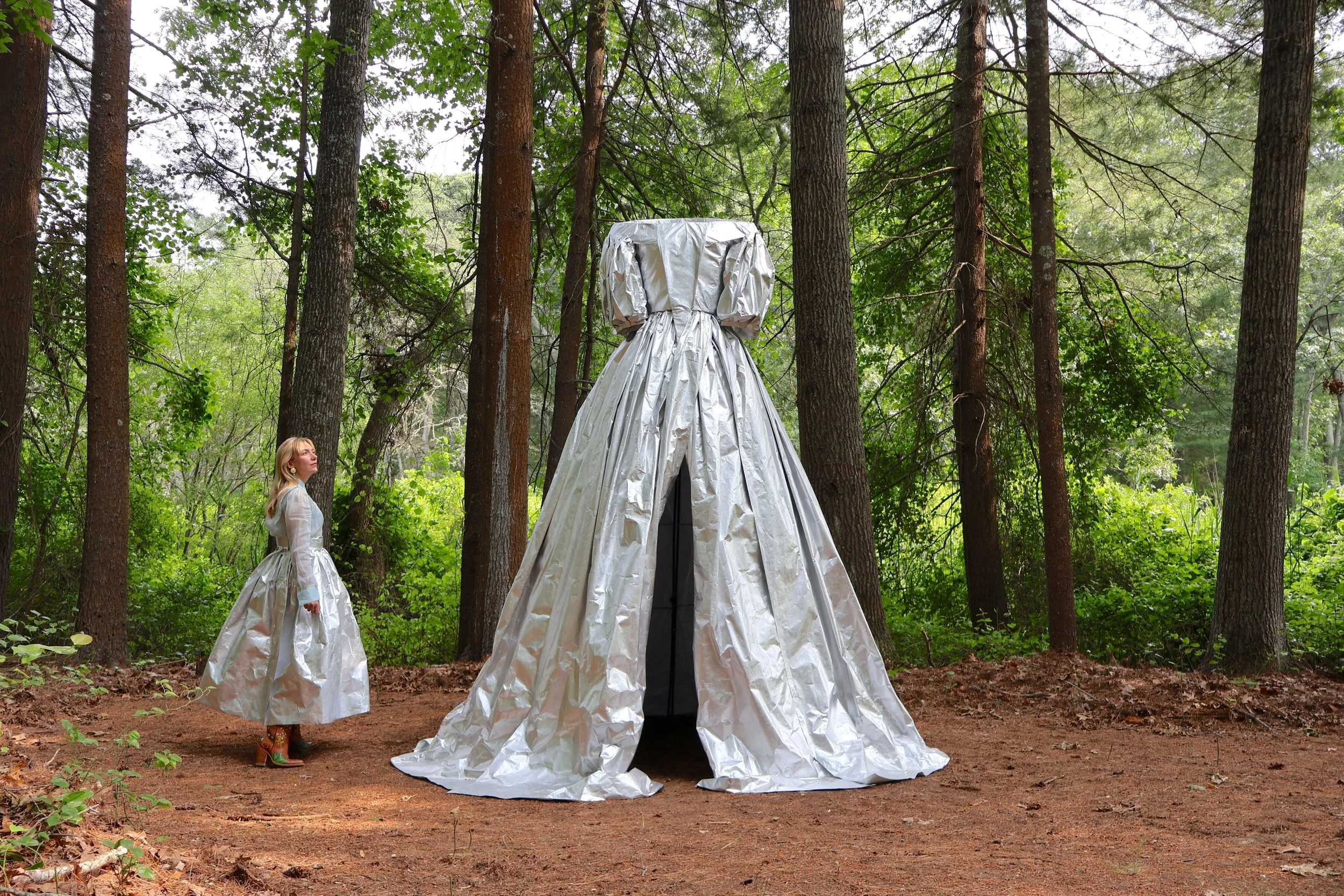
Cocoon was my first time building on an architectural scale, and the process completely changed how I think about materials and transformation. Instead of beginning with fabric, I began with welded steel and built a skeleton that a garment could grow around. Learning to work with steel was humbling. It is strong, but also incredibly responsive; every curve or weld altered the energy of the form.
Once the structure was complete, I shaped the Tyvek dress around it. Tyvek behaves very differently from traditional textile. It is tough, sculptable, and slightly unpredictable. I had to let it guide me as much as I guided it. Hand-cutting and sculpting the surface softened something industrial into something that felt lived-in and human.
Throughout the process I focused on honoring women whose histories are embedded in the land on Shelter Island, including Indigenous, African, and European women whose stories often go unrecognized. Building a dress large enough to step inside helped me imagine the ways women have always created protection, memory, and resilience from whatever materials were available to them. Even though my materials were steel and Tyvek, the act of shaping them felt like a continuation of that lineage.
Cocoon taught me that transformation happens when you step into unfamiliar mediums and trust the process to change you. It also reminded me that garments, no matter the material, can hold histories, and that honoring those histories is a form of care.
Transformation seems to be a recurring theme in your work—of fabric, memory, or identity. What does transformation mean to you now, and how has that understanding evolved?
In the early days of Artfully Awear, transformation was about survival. I was turning grief into color, and the act of making was a way to keep moving. Over time, my understanding of transformation has widened. It now feels quieter and more spacious, something that happens as we pay attention to what is shifting within us and around us.
For me, transformation is no longer about becoming someone entirely new. It is about growing more fully into who you already are while honoring what came before. Each garment, sculpture, and collaboration documents that evolution. The process feels less like a dramatic change and more like a slow, steady unfolding.
Looking ahead, are there new mediums, technologies, or collaborations you are excited to explore?
Absolutely. I am increasingly interested in involving more people directly in my process. My work truly comes alive when it is worn, so I want to design for movement as well as for stillness. This has led me toward performance, especially dance. I would love to partner with choreographers and dancers to create costumes that respond to the body in motion. Seeing color and form shift in real time opens up an entirely new layer of storytelling.
I am also developing a capsule collection. This is a new direction, since most of my work has been one-of-a-kind or part of large collaborations. Creating pieces that can be worn and owned by a wider audience feels both exciting and more accessible. It offers a way for people to bring the spirit of Artfully Awear into their everyday lives.
Both directions—performance and wearable collections—share the same intention. I want to expand the circle, invite more people into the work, and let the garments live beyond my hands. That is the future that feels most inspiring to me right now.